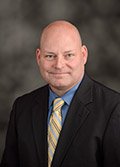
Mark Richards
Founder & Principal Consultant
Mark Richards is an accomplished public safety executive, educator, and consultant with over 30 years of experience in law enforcement, crisis management, and higher education. As Founder and Principal Consultant of Strategic Crisis Management Consultants, he provides expert guidance to K–12 schools, institutions of higher education, and public- and private-sector organizations in emergency operations planning, risk analysis, and vulnerability and site security assessments.
Mark began his career with the Louisiana State Police in 1995, rising to the rank of Captain before retiring in 2020. During his tenure, he led critical operations across multiple divisions, including the Crisis Response Section, the Training Academy, and the Bureau of Criminal Identification and Information. He oversaw statewide emergency management and response efforts, including operations for the Louisiana State Police Emergency Operations Center, SWAT, and Air Support Units. As ESF-13 (Public Safety and Security) Lead for the State of Louisiana, his leadership extended to multi-agency coordination for major events and complex incidents, as well as the development of statewide school safety and emergency management frameworks.
Following his retirement from state service, Mark transitioned into academia and consulting, continuing his commitment to public safety and education. He serves as Criminal Justice Program Coordinator at Louisiana State University at Eunice and as Adjunct Faculty with LSU’s National Center for Biomedical Research and Training (NCBRT/ACE), where he develops and delivers advanced training in emergency management and campus security. He also serves as a Faculty Fellow and Instructor at Tulane University, teaching undergraduate and graduate courses in emergency management, homeland security, and crisis leadership.
Mark holds an Associate of Science in Criminal Justice (Nicholls State University, ’93), a Bachelor of Arts in History (Excelsior College, ’08), and a Master of Public Administration (Louisiana State University, ’17). He is also a graduate of Northwestern University’s School of Police Staff and Command (Class 288) and Executive Management Program (Class 45). His professional affiliations include the International Association of Chiefs of Police and the International Association of Emergency Managers.
At Strategic Crisis Management Consultants, Mark brings a career of operational leadership, strategic planning, and hands-on training experience to help organizations strengthen preparedness, enhance security, and build resilience in an increasingly complex risk environment.